

A good media day lighting setup is the difference between "picture day" photos and photos your athletes actually post. I'm Don Money, an Indiana sports photographer and owner of Money Shot Photography, and I run media days for high school programs, youth clubs and pro teams all over Indianapolis and central Indiana. Here's how I light a media day, why the lights matter more than the location, and what coaches can do to make the day run smooth.
Hello, World!
Key takeaways
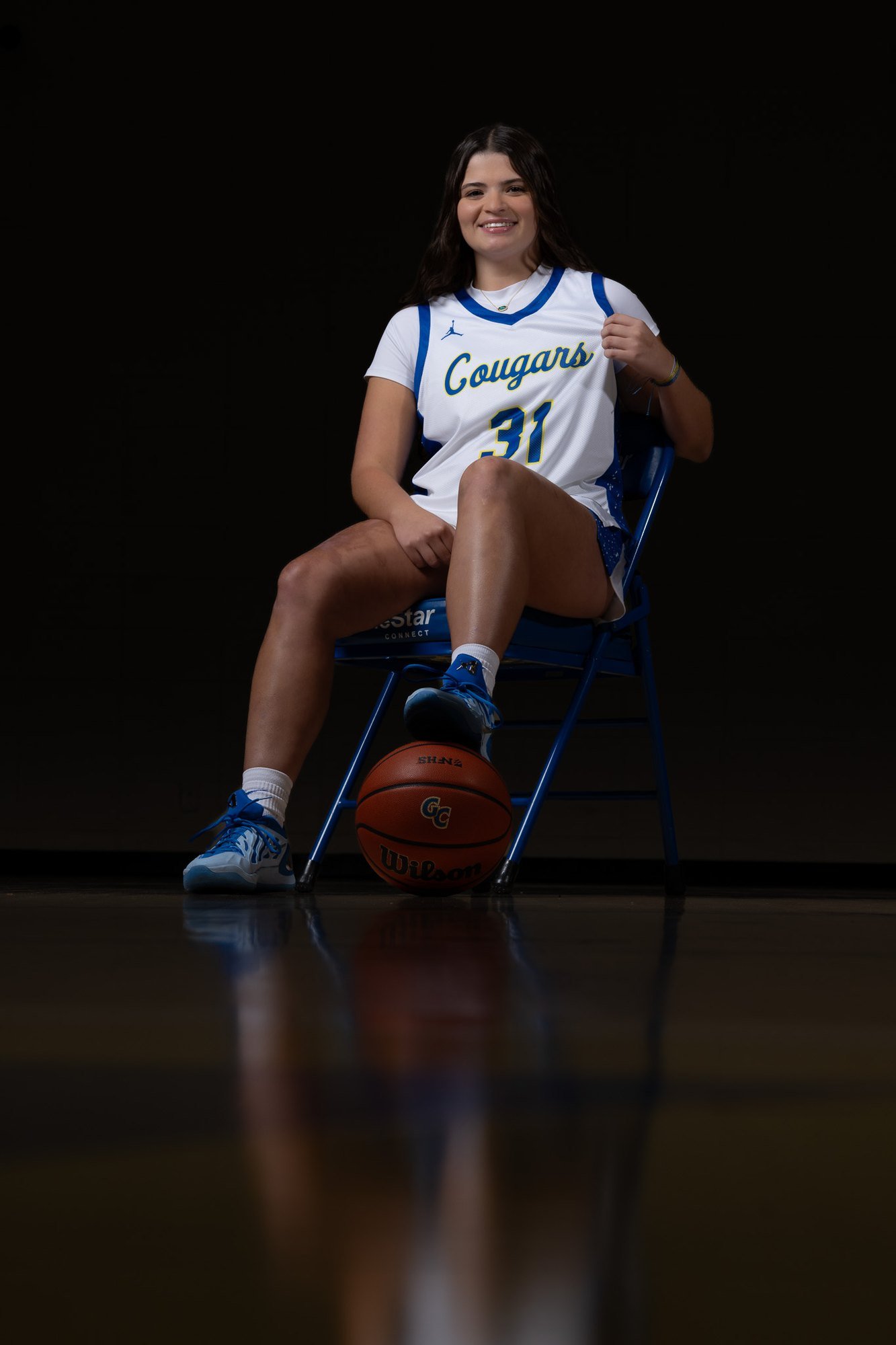
A media day lighting setup is built on a dark background, a key light on the athlete and rim lights behind them, with colored light for team identity.
Bringing my own lights means a plain gym, cafeteria or field can look like a pro photo studio.
I set the lights once and keep them locked, so every athlete on the roster gets the same bold look.
A clear timeline and a ready roster keep the line moving so nobody misses much practice time.
My goal is to deliver edited photos within 48 hours, ready for social media, programs and senior banners.
What is a media day lighting setup?
A media day lighting setup is the portable studio a photographer builds on site so every athlete can be photographed quickly with consistent, dramatic light. For me, that means off-camera flash, a dark backdrop or darkened space, and colored light that makes the team's colors pop.
Media day is where a program gets a season's worth of content in one session: individual player portraits, team and position-group photos, creative shots and senior banner portraits. The lighting setup is what ties all of that together, so the whole roster looks like it belongs to the same team.
How do you light a team media day?
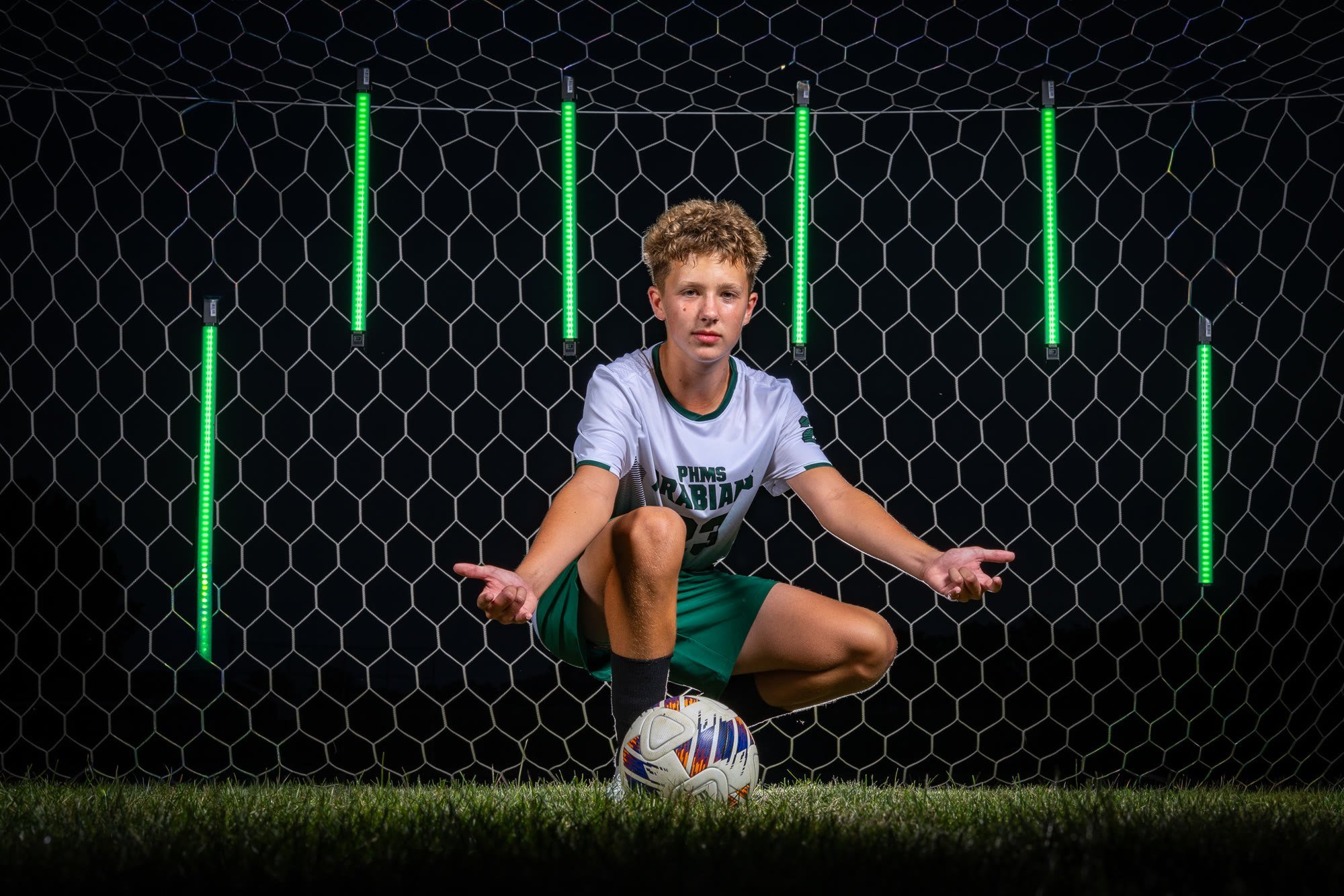
I light a team media day with a key light that shapes the athlete's face, rim lights from behind that outline their body against a dark background, and colored light that matches the team. Once it's dialed in, I lock it so every athlete gets the same look.
Here's how the sports portrait lighting comes together:
Start dark. I kill as much of the room light as I can, either with a dark backdrop or by working in a darker corner. A dark background is what makes the athlete jump off the screen.
Key light. This is the main light on the athlete. It's placed to shape the face and jersey so the player looks strong, not flat.
Rim lights. Lights behind the athlete trace the edges of the shoulders, helmet, hair and jersey. That edge light is what separates a player from a black background.
Color. Colored gels and colored light give the photo energy. I like to match team colors whenever I can.
Floor accents. Sometimes I add glowing light bars on the floor to frame the athlete and give the shot depth.
The light is the foundation. If your team wants the full dramatic look with smoke and fire, read how I create smoke and fire sports photos.
Why not just use the gym lights?
Gym and stadium lights come from straight overhead and light everything evenly, which gives athletes dark eye sockets and a busy background. Bringing my own lights lets me control where the light goes, so the athlete is the brightest thing in the frame.
That's why the location matters less than people think. A high school gym, a cafeteria, a hallway or the field after practice can all work. I just need a little space for the backdrop and lights and a power outlet nearby if we're indoors.
Do you need a dark background for media day photos?
No, but a dark background is my go-to because it makes colors and rim light pop. For some teams I'll switch to a bold solid color backdrop instead, like the team's own color, for a clean, bright look.
A bright backdrop in school colors works great for cheer and dance teams. It looks great on social media and in programs, and it still has that pro studio feel.
How long does a media day take?
A media day takes as long as your roster needs, and I build the timeline around your practice schedule. Because the lights stay locked once they're set, each athlete moves through quickly and nobody misses much practice time.
Here's what helps it go fast:
Send me your roster and jersey numbers ahead of time.
Have athletes in full uniform and ready to go before their turn.
Let me know about any props, like a ball, helmet or bat, so they're on hand.
Decide on team and position-group photos ahead of time so we can knock those out together.
Flag your seniors so we can plan dramatic senior banner portraits in the same session.
Can every athlete get the dramatic look?
Yes. At a Money Shot Photography media day, every athlete gets the same dramatic lighting, not just the starters. That consistency is what makes a team's social feed, programs and banners look pro-level.
It works the same for a varsity program in Indianapolis, a youth club in Fishers or a pro team. High school and pro teams can see how it works on my team media day photography page, and travel teams and leagues can check out youth sports club photography in Indiana.
Media day lighting FAQ
How much does a team media day cost?
Team media days are priced by roster size and deliverables. See the Media Day flyer on my team media day page, or call (317) 922-6763 for a quote. Individual senior portraits are $150.
Where do you do media days?
Anywhere in Indiana, including Indianapolis, Fishers, Carmel, Noblesville, Anderson, Greenfield and Muncie. I also travel out of state.
What do I need to provide for a media day?
A space big enough for a backdrop and lights, access to power indoors, your roster and athletes in uniform. I bring the lighting and backdrop.
How fast do we get our photos?
My goal is to deliver edited photos within 48 hours.
When should we book a winter sports media day?
Book early. I'm booking basketball, wrestling, swimming, cheer and dance media days now for November and December, and dates fill fast.
Book your media day
Want your whole roster to look like pros this season? Book your media day with Money Shot Photography, email dmoney@shotsbymoney.com or call (317) 922-6763. Let's make your team look loud.